Data Lake and Dashboard for Mobility: Manage and Analyse Data Efficiently
With the exponential increase in data generated by urban mobility and goods, it is becoming increasingly urgent to have advanced tools to interpret it effectively. Traditional approaches are no longer sufficient: integrated and structured platforms are needed that can collect, validate and make heterogeneous data usable.
We design and build Data Lakes and ETL systems using open source technologies, transforming raw data into interactive dashboards that are useful for public bodies, companies and stakeholders involved in mobility planning and management.
Why are data lakes needed in mobility?
Mobility data comes from a wide variety of sources: road sensors, public transport systems, connected vehicles, GPS, mobile phone cells and mobility apps. A data lake allows you to:
- Collect large volumes of data in real time or deferred
- Store information in raw format for subsequent analysis
- Organizzare i dati in modo scalabile e consultabile
It is a flexible and powerful infrastructure that forms the basis for any data-driven planning strategy in the transport sector.
ETL systems: transforming complex data into useful information
The operational core of our projects is the ETL (Extract, Transform, Load) system, which allows you to:
- Extract data from diverse sources (open data, databases, sensors, APIs)
- Transform and homogenise them to make them comparable
- Upload them to ready-to-use relational or NoSQL databases
This process ensures data quality, consistency and timeliness, making it available for rapid analysis and informed decisions.
Custom dashboards: from data to decisions
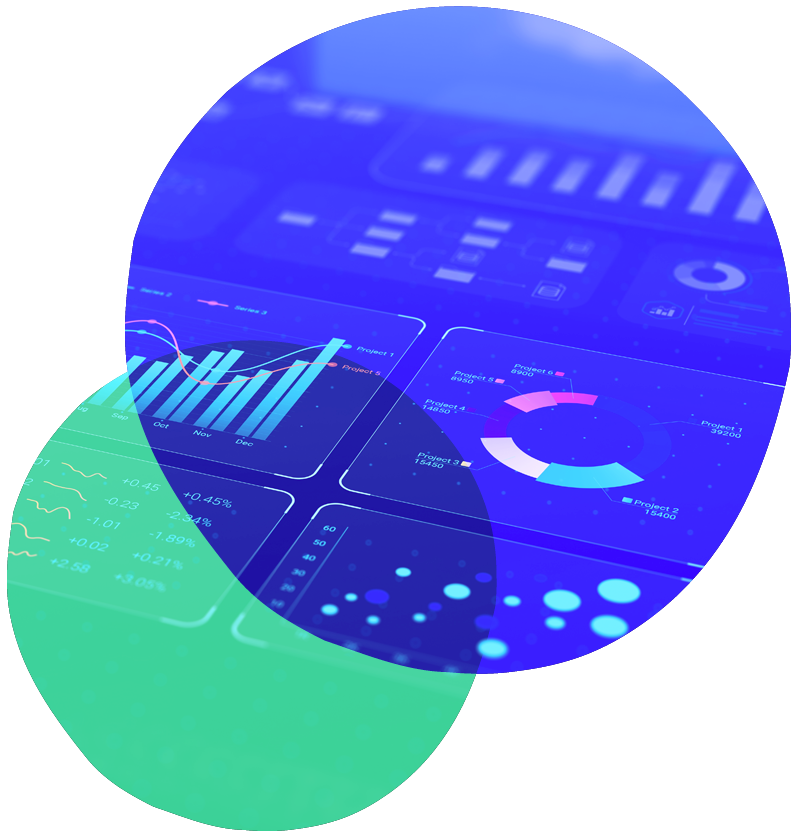
Once the data has been collected and processed, we develop interactive dashboards and dynamic visualisations designed to meet the specific needs of each territory or project. The dashboards allow you to:
- Monitoring mobility flows in real time
- Analysing critical issues in traffic and public transport
- Assess the impacts of events, interventions or alternative scenarios
With intuitive tools that are accessible even to non-technical users, dashboards improve the analytical capabilities of institutions and administrations, providing operational support for urban planning.
One platform, many benefits
Centralising data in a single, integrated platform simplifies all stages of technical work and decision-making. The benefits are tangible:
- Reduction of information fragmentation
- Greater transparency and replicability of analyses
- Standardisation of monitoring processes
- Greater responsiveness in mobility management
With a well-structured database and advanced reading tools, it is easier to identify priorities, plan interventions and communicate results effectively.
Conclusion
Data lakes and dashboards are now essential tools for tackling the challenges of urban mobility. Their ability to aggregate, simplify and enhance large volumes of data enables public bodies, operators and stakeholders to make more informed, timely decisions based on concrete evidence.
Our approach combines technical expertise, design flexibility and open source tools to offer tailor-made solutions that support smarter, more sustainable mobility geared towards the real needs of the local area.
What are data lakes in mobility?
Digital infrastructure that enables the collection, storage and organisation of large amounts of data from different sources related to mobility.
What does an ETL system do?
It extracts data from various sources, transforms it into an analysable format, and loads it into structured databases for use in dashboards or analyses.
Why use dashboards in mobility?
To make traffic and transport data more understandable and useful to public decision-makers, technicians and stakeholders.
What are the advantages of an integrated platform?
Eliminate data fragmentation, facilitate monitoring, and support faster, evidence-based operational decisions.
Are the solutions customisable?
Yes, each dashboard and data structure is tailored to the specific needs of the territory, project and stakeholders involved.
Related projects
Need more information? Contact us
Contact Us
- Viale Luca Gaurico, 9
00143, Roma - +39 0656546119
+39 3470891843
[email protected]

